Basement Seepage Water Damage in Overland Park, KS
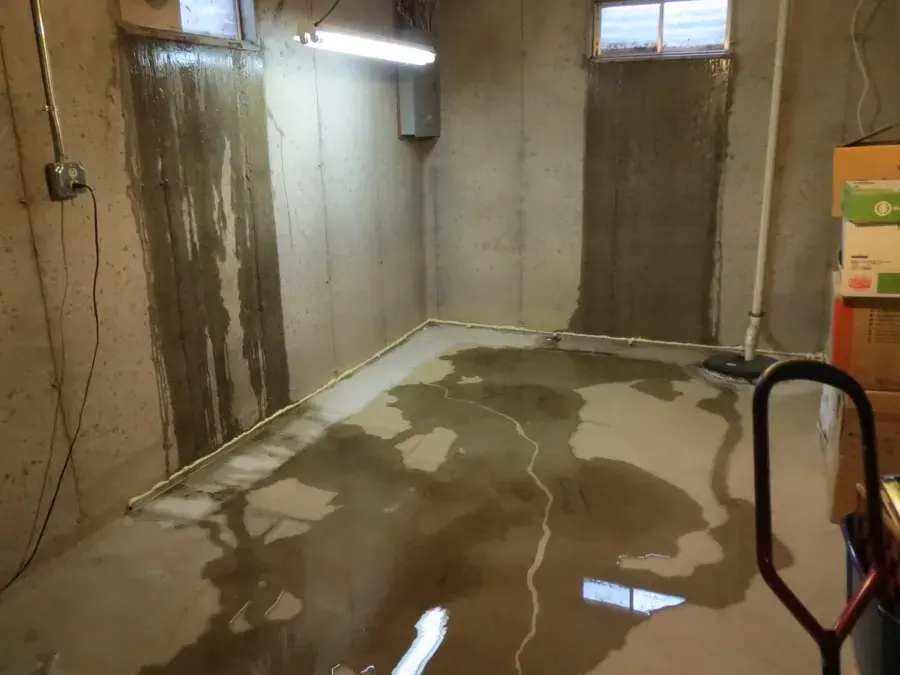
Seepage is slow, so it hides under carpet and behind drywall. The drying team finds how far it traveled, removes what cannot dry and dries the lower level to a verified reading.
What to do the moment you find basement seepage
- Trace the wet edgeFeel along carpet at the wall to see how far it reaches.
- Pull stored items awayMove boxes off the wall so the area can dry.
- Photograph the wallsPictures of cracks and stains help later.
- Call for a moisture mapThe drying team finds the water you cannot see.
How basement seepage is handled in Overland Park, KS
- 01First visit
Moisture mapping
The tech who does the walkthrough maps wet materials with pinless meters and thermal imaging before any equipment goes down.
- 02Day 0
Extraction
The extraction crew pulls standing water with truck-mounted extraction and sets the category and class of the loss.
- 03Days 1 to 3
Air movers and LGR
The drying team sizes air movers and LGR dehumidifiers to each room's evaporation load and records readings daily.
- 04Days 3 to 5, typical
Dry verification
Equipment comes out when the readings reach the drying goal. Hardwood, plaster and slab take longer.
The drying goal: wet materials read within 2 to 4 points of a dry reference material in the same building. Equipment leaves on readings, not on a schedule.
What does basement seepage cost in Overland Park, KS?
In Overland Park, KS, cleanup after basement seepage typically runs $800 to $5,000, depending on how far the water traveled under flooring and into finished walls.
- Moisture mapping
- Pad section removed
- Dehumidifier
- Baseboard and drywall base
- Air movers and LGR
- Daily readings
- Flood cuts
- Carpet removal
- Full structural drying
What moves the number: how far the water traveled, the material class, how much finished wall is involved, and how long it went unnoticed. For a closer planning range, try the water damage cost calculator. These are typical ranges, not quotes.
Johnson County sits on clay-rich soil over limestone. Clay swells when it is saturated and shrinks in dry spells, and that movement opens hairline cracks in poured and block foundation walls. After a long wet stretch, water under pressure in the soil finds those cracks, the cove joint where the wall meets the floor, and gaps around pipe penetrations.
Signs it is seepage
- Damp carpet along one wall, not in the middle of the room
- White mineral streaks on the concrete
- A wet line at the base of the drywall after rain
- Musty air in a finished lower level
Why seepage is easy to miss
A burst pipe is loud. Seepage is quiet. It can soak the carpet pad and the bottom plate of a finished wall for days before anyone sees a stain. The tech who does the walkthrough uses thermal imaging and pinless meters to trace the wet edge, often finding it several feet further than the visible damage.
Seepage water is usually treated as Category 2 because it passed through soil. Wet pad is typically removed and surfaces cleaned before drying.
Drying now, sealing later
The restoration team's job is the water damage: extraction, removal of materials that cannot dry, and structural drying with LGR dehumidifiers until the readings reach the goal. Stopping future seepage, through crack injection, grading, gutters or an interior drain, is a separate waterproofing job. For how the city handles drainage and stormwater, see the City of Overland Park stormwater page. K-State Research and Extension also publishes home and soil information for Kansas.
If the seepage turned into standing water, see basement flooding cleanup.
Covering Overland Park and nearby Johnson County
The restoration team covers every Overland Park ZIP, from Downtown Overland Park and Nall Hills to Blue Valley, Stanley and Morse, plus Leawood, Olathe, Lenexa, Shawnee, Merriam, Mission and Prairie Village.
See every neighborhood and ZIP coveredBasement Seepage Water Damage questions in Overland Park, KS
Why does my basement leak after long rains?
Saturated clay soil pushes water through cracks, the cove joint and pipe gaps. It is most common after several wet days in spring.
Is seepage the same as flooding?
No. Seepage is slow water through the foundation. Flooding is standing water, often from a sump, drain or storm.
Can the drywall be dried in place?
If the water was caught early and readings allow it, yes. Long-term wicking usually means cutting the bottom of the wall.
Will drying fix the leak?
No. Drying repairs the damage. Stopping the water is a separate waterproofing or drainage job.
How do I know how far it spread?
Thermal imaging and moisture meters show wet materials that look dry to the eye.
Is seepage covered by insurance?
Gradual seepage is often treated differently from sudden water. Coverage depends on your policy, so it is worth checking with your own insurer.
Basement seepage in Overland Park? Call now.
The drying team traces the wet edge with meters and thermal imaging, then dries it to the IICRC S500 goal.