Roof Leak Water Damage in Overland Park, KS
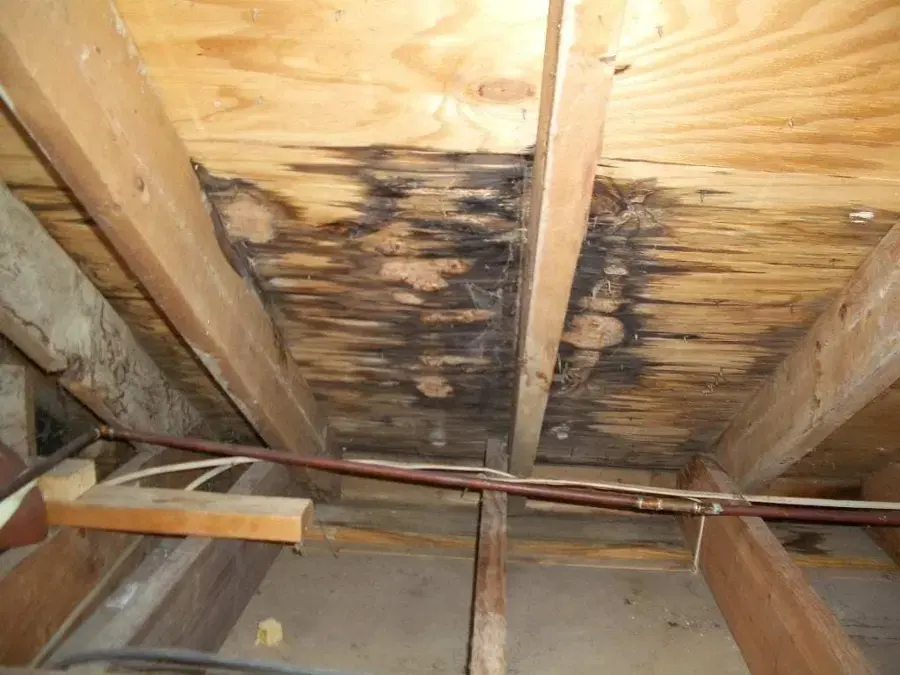
Roof water soaks insulation and framing long before it shows on a ceiling. The drying team dries the attic, ceilings and walls once the roof is tarped or repaired.
What to do the moment you find a roof leak
- Catch the dripBuckets and towels under the leak protect the floor.
- Get the roof coveredA roofer tarps or repairs it to stop new water.
- PhotographDate-stamped pictures of the roof and ceilings.
- Call for dryingWet insulation and ceilings dry faster when caught early.
How a roof leak is handled in Overland Park, KS
- 01First visit
Moisture mapping
The tech who does the walkthrough maps wet materials with pinless meters and thermal imaging before any equipment goes down.
- 02Day 0
Extraction
The extraction crew pulls standing water with truck-mounted extraction and sets the category and class of the loss.
- 03Days 1 to 3
Air movers and LGR
The drying team sizes air movers and LGR dehumidifiers to each room's evaporation load and records readings daily.
- 04Days 3 to 5, typical
Dry verification
Equipment comes out when the readings reach the drying goal. Hardwood, plaster and slab take longer.
The drying goal: wet materials read within 2 to 4 points of a dry reference material in the same building. Equipment leaves on readings, not on a schedule.
What does a roof leak cost in Overland Park, KS?
In Overland Park, KS, roof leak water damage cleanup typically runs $1,000 to $6,000, not counting the roof repair, depending on how much insulation, ceiling and wall got wet.
- Moisture mapping
- Insulation section out
- Drying
- Ceiling drywall opened
- Air movers and dehumidifiers
- Daily logs
- Exterior wall drying
- Several rooms
- Documentation
What moves the number: how long the roof leaked, the amount of wet insulation, how many rooms got wet, and how fast drying started. For a closer planning range, try the water damage cost calculator. These are typical ranges, not quotes.
Johnson County sits in a busy hail belt. Spring storms bruise shingles and strip granules, and wind lifts tabs and flashing. The damage often does not leak right away; it leaks on the next heavy rain. In winter, snow that melts and refreezes at the eaves forms ice dams that push water up under the shingles and into the attic and exterior walls.
Where roof water goes
- Into attic insulation, which holds it like a sponge
- Along rafters and down the top plates of exterior walls
- Onto the top-floor ceiling drywall
- Around skylights, chimneys and plumbing vents
The order of work
The roof comes first: a roofer tarps or repairs the leak so new water stops coming in. Then the tech who does the walkthrough maps moisture in the attic, ceilings and walls with thermal imaging and meters. Wet blown-in or batt insulation is usually removed. The drying team dries the decking, rafters and drywall with air movers and dehumidifiers, and logs readings until they reach the drying goal.
After a hail storm, photograph the roof from the ground and the ceilings inside, with dates. It helps any claim and the roofer.
Ice dams in Overland Park
Ice dams form when heat from the house melts roof snow that refreezes at the cold eaves. Better attic insulation and ventilation help prevent them. The NWS Kansas City office posts hail and winter storm warnings, and Ready.gov winter weather covers winter prep. If the water is coming from interior plumbing instead, see ceiling leak water damage.
Covering Overland Park and nearby Johnson County
The restoration team covers every Overland Park ZIP, from Downtown Overland Park and Nall Hills to Blue Valley, Stanley and Morse, plus Leawood, Olathe, Lenexa, Shawnee, Merriam, Mission and Prairie Village.
See every neighborhood and ZIP coveredRoof Leak Water Damage questions in Overland Park, KS
How do I know if hail damaged my roof?
Missing granules, dented vents and gutters, and new ceiling stains after rain are common signs. A roofer can confirm.
What is an ice dam?
A ridge of ice at the eaves that traps melting snow, which then backs up under the shingles.
Does wet insulation have to be replaced?
Soaked insulation usually does, because it holds water and loses its value.
Who fixes the roof?
A roofer repairs or tarps the roof. The restoration team dries the water damage inside.
Is roof leak damage covered?
Storm damage is often reviewed differently from wear and tear. Coverage depends on your policy, so it is worth checking with your own insurer.
How long does attic drying take?
Usually three to five days after wet insulation is removed.
Roof leak in Overland Park? Call now.
The drying team maps the attic and ceilings and dries the framing once the roof is covered.