Frozen Pipe Cleanup in Overland Park, KS
A frozen pipe splits quietly and floods when it thaws. The restoration team extracts the water and dries the wall, ceiling or basement where the line let go.
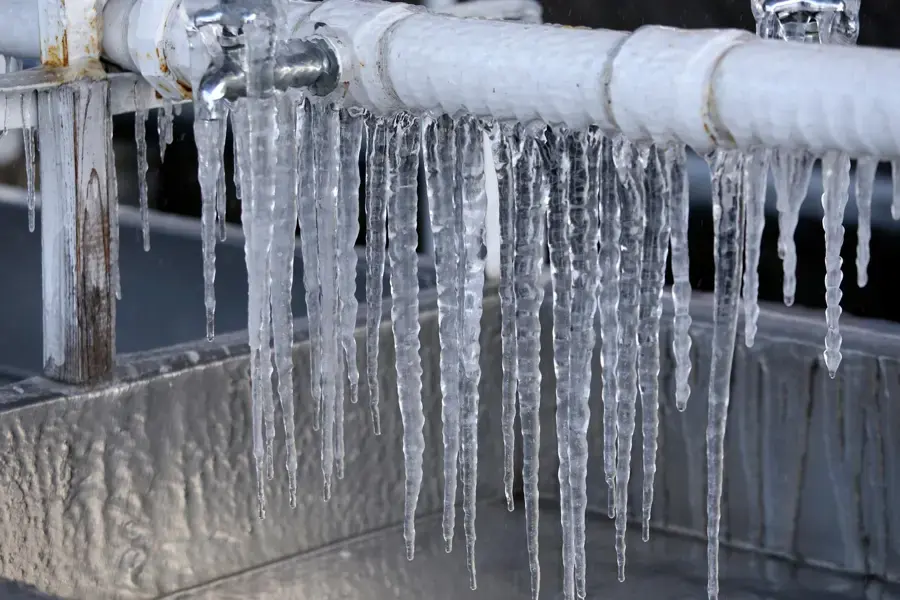
What to do the moment you find a frozen pipe
- Shut the mainClose the main valve before the ice fully thaws.
- Open the faucetRelieve pressure on the frozen line.
- Protect the room belowMove items out from under the wet ceiling.
- Call for dryingWet insulation and drywall need extraction and airflow.
How a frozen pipe is handled in Overland Park, KS
- 01First visit
Moisture mapping
The tech who does the walkthrough maps wet materials with pinless meters and thermal imaging before any equipment goes down.
- 02Day 0
Extraction
The extraction crew pulls standing water with truck-mounted extraction and sets the category and class of the loss.
- 03Days 1 to 3
Air movers and LGR
The drying team sizes air movers and LGR dehumidifiers to each room's evaporation load and records readings daily.
- 04Days 3 to 5, typical
Dry verification
Equipment comes out when the readings reach the drying goal. Hardwood, plaster and slab take longer.
The drying goal: wet materials read within 2 to 4 points of a dry reference material in the same building. Equipment leaves on readings, not on a schedule.
What does a frozen pipe cost in Overland Park, KS?
In Overland Park, KS, frozen pipe cleanup typically runs $1,000 to $6,500, depending on where the pipe split and how much insulation, drywall and flooring got wet.
- Extraction
- Cavity drying
- Readings
- Wet insulation removed
- Air movers and LGR
- Daily logs
- Ceiling and flooring removal
- Subfloor drying
- Documentation
What moves the number: where the pipe split, how long it ran after thawing, the material class, and how fast drying started. For a closer planning range, try the water damage cost calculator. These are typical ranges, not quotes.
Overland Park winters swing between mild days and arctic cold snaps with single-digit lows and wind. Pipes in unheated spaces freeze, the ice expands, and the pipe splits. Nothing leaks while it is frozen. The water comes when the ice thaws, often the next afternoon, and it runs until someone closes the main.
Where pipes freeze here
- Supply lines in outside walls, especially on the north and west sides
- Pipes in garages under a bonus room, common in 1990s and 2000s homes
- Crawl spaces under additions and older split-levels
- Outdoor spigots with a hose still attached, or without a frost-proof valve
- Kitchen and bath sinks on outside walls with the cabinet doors closed
The cleanup
Freeze water starts as Category 1. The extraction crew removes standing water, the tech who does the walkthrough maps the wet walls and ceilings, and the drying team dries inside the cavity where possible. Winter air is dry outside but a closed house is not, so LGR dehumidifiers do most of the work. Garage ceilings and bonus-room floors often need a section opened to reach wet insulation.
If a pipe is frozen but not leaking yet, keep the faucet open and warm the area gently. Never use an open flame on a pipe.
Prevention for next winter
Insulate pipes in exterior walls and garages, disconnect hoses in the fall, and let faucets drip during extreme cold. The National Weather Service cold safety page and Ready.gov winter weather list more steps. If the line burst for another reason, see burst pipe cleanup.
Covering Overland Park and nearby Johnson County
The restoration team covers every Overland Park ZIP, from Downtown Overland Park and Nall Hills to Blue Valley, Stanley and Morse, plus Leawood, Olathe, Lenexa, Shawnee, Merriam, Mission and Prairie Village.
See every neighborhood and ZIP coveredFrozen Pipe Cleanup questions in Overland Park, KS
Why did the leak start after the cold snap ended?
The pipe split while frozen, and water only escapes once the ice thaws.
Which pipes freeze most in Overland Park homes?
Lines in outside walls, garages under bonus rooms, crawl spaces and outdoor spigots.
Can I thaw a frozen pipe myself?
Gentle heat like a hair dryer is fine. Never use an open flame, and keep the faucet open.
Does wet insulation have to come out?
Fiberglass batts that soaked usually do. Drywall can often be dried in place if it was caught early.
Is frozen pipe damage covered?
Often, if the home was heated. Coverage depends on your policy, so it is worth checking with your own insurer.
How long does drying take?
Usually three to five days after extraction.
Frozen pipe burst in Overland Park? Call now.
The restoration team extracts the thaw water and dries the wall, ceiling or basement to a verified reading.